

7 Clear Signs of Ovulation: How to Tell When You Are Most Fertile
Want to know when you are ovulating? Discover the 7 unmistakable physical signals your body gives you during your peak fertile days, from egg-white fluid to pelvic twinges.
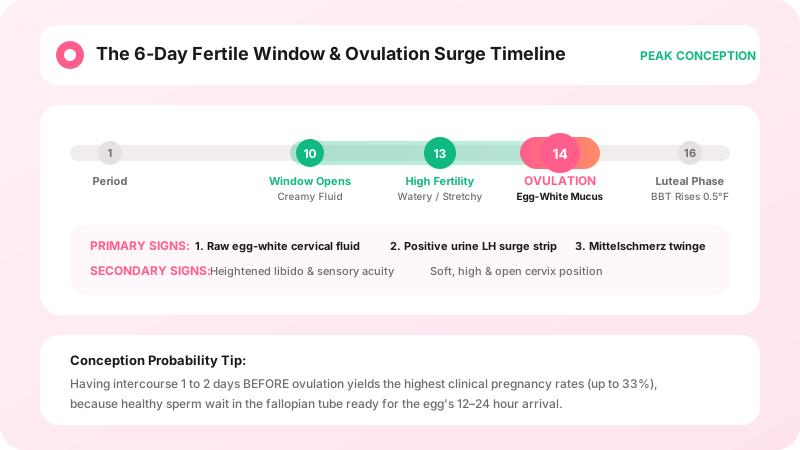
Key Takeaways at a Glance
Why Tracking Ovulation Signs Matters
Whether you are actively trying to conceive or simply tuning into your body's natural monthly rhythm, knowing when you ovulate is empowering. Ovulation happens when an ovary releases a mature egg into the fallopian tube. Because the egg only survives for 12 to 24 hours, but sperm can live in fertile fluid for up to 5 days, your body sends distinct hormonal cues during your 6-day fertile window to signal that fertility is peaking.
Key Checklist & Essential Facts
- Ovulation is the only time in your monthly cycle when pregnancy is biologically possible
- Your fertile window spans the 5 days before ovulation plus ovulation day itself
- You can calculate your estimated dates in seconds using our Ovulation Calculator
The 7 Unmistakable Physical Signs of Ovulation
As estrogen and luteinizing hormone (LH) surge in the middle of your cycle, look out for these clear biological signals:
Key Checklist & Essential Facts
- 1. Raw Egg-White Cervical Mucus: The gold standard. Discharge becomes clear, slippery, and stretchy between your fingers, providing an alkaline pathway for sperm.
- 2. Mittelschmerz (One-Sided Pelvic Twinges): A mild ache or sudden twinge on the lower left or right side of your pelvis as the follicle ruptures.
- 3. Increased Sexual Desire (Libido): Surging estrogen and testosterone naturally peak around ovulation, heightening desire and confidence.
- 4. Soft, High, and Open Cervix: During fertile days, the cervix rises higher, feels soft like your lips (rather than firm like the tip of your nose), and slightly opens.
- 5. Mild Breast or Nipple Tenderness: Hormonal shifts just prior to egg release can cause light sensitivity or fullness in breast tissue.
- 6. Heightened Sense of Smell and Taste: Many women notice sharper sensory perception and heightened smell sensitivity during peak estrogen.
- 7. Light Ovulatory Spotting: A tiny droplet of pink or light brown spotting can occur when the follicle stretches and releases the egg.
How to Confirm Ovulation After It Happens
While cervical fluid and LH predictor kits alert you before ovulation happens, there is one reliable at-home sign that confirms ovulation has already occurred: Basal Body Temperature (BBT). When the egg is released, the empty follicle transforms into the corpus luteum and pumps out progesterone. Progesterone raises your resting body temperature by 0.5°F to 1.0°F (0.3°C to 0.6°C), which stays elevated until your next period starts.
Key Checklist & Essential Facts
- Take your temperature immediately upon waking with a digital basal thermometer before getting out of bed
- A sustained thermal shift over 3 consecutive days confirms that ovulation took place
- If temperature stays elevated past 18 days, it is one of the earliest reliable indicators of pregnancy
Best Timing for Intercourse to Conceive
If you want to get pregnant, don't wait until the day of ovulation! Clinical research shows that the highest conception rates occur when intercourse happens 1 to 2 days before ovulation. This ensures healthy sperm are already waiting in the fallopian tube when the egg drops. Use our Implantation Calculator to see when early implantation occurs after successful fertilization.
Key Checklist & Essential Facts
- Have intercourse every 1 to 2 days as soon as you observe egg-white cervical fluid
- Avoid commercial lubricants that can harm sperm motility; use fertility-safe options or natural fluid
- Remain resting comfortably for 10 to 15 minutes post-intercourse to aid sperm transit
Frequently Asked Questions
Clear, doctor-reviewed answers to common questions
How many days after your period do you ovulate?+
What does ovulation discharge look like?+
Can you ovulate without having symptoms?+
Does Mittelschmerz cramp mean the egg has already released?+
The health guides, cycle timelines, natural remedies, and symptom insights published on Period Tracker & Ovulation are strictly for general educational, self-tracking, and informational purposes. They are not a substitute for clinical advice, formal medical diagnosis, or personalized treatment plans. If you have severe pelvic discomfort, irregular bleeding, or questions about pregnancy, always consult with a licensed physician or gynecologist.
Recommended Health Guides
Continue reading certified guides in Ovulation & Fertility.


Conception, Ovulation & Implantation Authority Cluster
Verify fertile windows, blastocyst implantation timing, and basal body temperature shifts.