

Why Is My Period Late? 10 Common Causes Other Than Pregnancy
Period late but testing negative for pregnancy? Discover 10 medically validated reasons your period is delayed, from elevated cortisol and travel to thyroid shifts and PCOS.
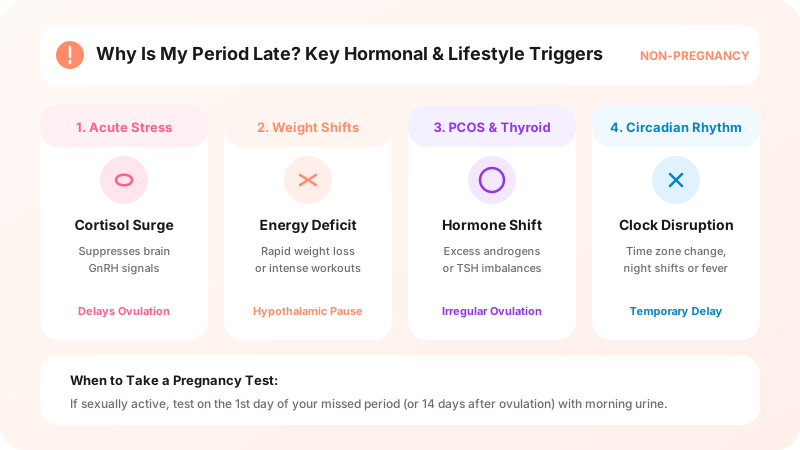
Key Takeaways at a Glance
Understanding Why Periods Get Delayed
When your period does not show up on its expected date, your mind might instantly jump to pregnancy. But if pregnancy is not possible or your home pregnancy tests are negative, you are not alone. Menstruation is controlled by a delicate feedback loop between your brain (the hypothalamus and pituitary gland) and your ovaries, known as the HPO axis. When anything disrupts this communication line, ovulation is delayed, and because your period always follows ovulation by about two weeks, your period arrives late too.
Key Checklist & Essential Facts
- Your period is delayed only because ovulation occurred later than usual or hasn't happened yet
- A period is clinically considered 'late' once it is 5 or more days past your expected date
- If a period is late by 6 weeks or more, doctors refer to it as amenorrhea
Top 10 Medically Proven Causes of a Late Period
Here are the ten most frequent non-pregnancy triggers that can push back your menstrual cycle:
Key Checklist & Essential Facts
- 1. Acute Emotional or Physical Stress: High cortisol suppresses Gonadotropin-Releasing Hormone (GnRH), pausing the signal to release an egg.
- 2. Rapid Weight Loss or Intense Exercise: An energy deficit causes the hypothalamus to temporarily shut down non-essential reproductive functions.
- 3. Polycystic Ovary Syndrome (PCOS): Higher levels of androgens cause immature follicles to stall, leading to irregular or skipped periods.
- 4. Thyroid Disorders: An underactive (hypothyroid) or overactive (hyperthyroid) thyroid directly alters prolactin and estrogen metabolism.
- 5. Recent Illness or Medication: A bout of the flu, COVID-19, or taking emergency contraception (Plan B) can delay cycle timing by several days.
- 6. Circadian Rhythm & Travel: Flying across multiple time zones or switching to night shifts alters melatonin and core body clock hormones.
- 7. Changing Birth Control: Starting, stopping, or switching hormonal birth control pills, patches, or IUDs can cause irregular bleeds for 3 to 6 months.
- 8. Elevated Prolactin (Hyperprolactinemia): Elevated prolactin levels suppress ovulation, sometimes accompanied by milky nipple discharge.
- 9. Perimenopause Transition: In women in their 40s (and late 30s), fluctuating estrogen causes cycles to lengthen or shorten unpredictably.
- 10. Sudden Dietary Changes: Extreme low-carb diets, intermittent fasting, or nutrient deficiencies can signal nutritional stress to the ovaries.
How Long Can a Period Be Late Before You Should Worry?
A delay of 2 to 5 days is very common and usually resolves on its own without any medical treatment. If your period is more than 7 days late and you have had unprotected intercourse, take a home pregnancy test using our Pregnancy Test Calculator to check optimal detection timing. If your pregnancy test is negative and your period has not arrived after 3 consecutive months (or if you experience severe pelvic pain or unusual hair growth), schedule a visit with your gynecologist.
Key Checklist & Essential Facts
- 1 to 4 days late: Normal physiological variation; stay hydrated and monitor symptoms
- 5 to 7 days late: Take a home pregnancy test with morning urine if sexually active
- Over 35 days total cycle: Classified as oligomenorrhea; consider hormonal blood work
- 3 months without a period: Requires medical evaluation to check thyroid, prolactin, and ovarian health
Simple Steps to Help Regulate Your Cycle Naturally
Supporting your hormonal rhythm starts with daily nervous system care. Prioritizing 7 to 9 hours of uninterrupted sleep, eating balanced meals with adequate complex carbohydrates and healthy fats, and moderating high-intensity workouts with restorative walking or yoga can dramatically lower stress hormones. If you suspect cycle irregularity, tracking your dates in our Period Calculator will give your doctor clear, objective data to review.
Key Checklist & Essential Facts
- Maintain consistent sleep and wake times to stabilize pituitary hormone signaling
- Incorporate healthy fats (avocados, seeds, olive oil) essential for sex hormone production
- Practice daily gentle stress reduction like deep breathing, warm baths, or herbal teas
Frequently Asked Questions
Clear, doctor-reviewed answers to common questions
Can stress really delay your period by a week or more?+
My pregnancy test was negative, but my period is still missing. What should I do?+
Does Plan B or emergency contraception make your period late?+
Can losing weight quickly stop your period?+
The health guides, cycle timelines, natural remedies, and symptom insights published on Period Tracker & Ovulation are strictly for general educational, self-tracking, and informational purposes. They are not a substitute for clinical advice, formal medical diagnosis, or personalized treatment plans. If you have severe pelvic discomfort, irregular bleeding, or questions about pregnancy, always consult with a licensed physician or gynecologist.
Recommended Health Guides
Continue reading certified guides in Period & Menstrual Cycle.



Menstrual Cycle Health, Safe Days & Flow Diagnostics
Understand menstrual blood clot dimensions, natural family planning safe days, and cycle lengths.