

White discharge before period: early pregnancy sign or PMS coming?
Discover why creamy white discharge increases before your period, how pregnancy leukorrhea differs from premenstrual fluid, and when to test.
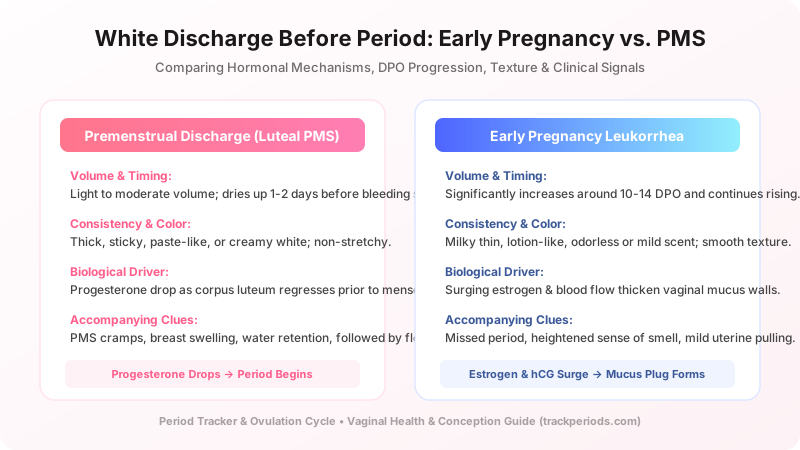
Key Takeaways at a Glance
Why Estrogen & Progesterone Cause White Discharge Before Your Period
Experiencing creamy, lotion-like white discharge in the days leading up to your expected period is extremely common. Physiologically termed leukorrhea, this discharge is composed of cervical mucus, normal vaginal fluid, shedding epithelial cells, and healthy lactobacilli bacteria. Its primary function is to cleanse the vaginal canal and prevent ascending bacterial infections.
Key Checklist & Essential Facts
- Normal Luteal Hormones: Following ovulation, the corpus luteum secretes progesterone, transforming thin, slippery ovulatory mucus into thicker, opaque white or cream fluid
- Secondary Estrogen Surge: A minor secondary estrogen spike occurs mid-luteal phase (around 7 to 9 DPO), temporarily boosting mucus production
- Vaginal Self-Cleaning: As endometrial shedding approaches, dead cells naturally slough off, creating creamy white or pasty residue on underwear
Pregnancy Leukorrhea vs. Pre-Period Discharge: Key Differences
Distinguishing whether pre-period white discharge signals impending menstruation or early conception comes down to volume, consistency progression, and accompanying systemic symptoms.
Key Checklist & Essential Facts
- Volume Trend: Pre-period discharge typically diminishes and dries out 24 to 48 hours before bleeding starts. In early pregnancy, discharge noticeably increases and stays persistent
- Consistency: Pregnancy leukorrhea is usually thinner, milky, and slippery like watered lotion; premenstrual discharge is thicker, pasty, and tacky
- Odor & Color: Both should be white or pale off-white with virtually zero odor or a very mild, non-offensive tangy scent
- Associated Signs: Early pregnancy leukorrhea often pairs with heightened fatigue, mild uterine pulling, and a missed period. Review our early pregnancy symptoms vs PMS comparison to analyze symptom clusters
Days Past Ovulation (DPO) Discharge Progression Timeline
Tracking your daily discharge consistency from ovulation through your expected period date provides helpful cycle insights:
Key Checklist & Essential Facts
- 1 to 3 DPO: Immediate post-ovulation dry-up; fluid turns sticky or gummy as progesterone rises
- 4 to 7 DPO: Scant creamy or lotion-like discharge; early luteal phase baseline
- 8 to 10 DPO: Implantation window; some women notice an increase in creamy leukorrhea or light pink implantation spotting
- 11 to 14 DPO: If not pregnant, discharge thickens and dries up prior to flow; if pregnant, milky leukorrhea flows continuously as vascularization increases
Normal Discharge vs. Yeast Infections (Candida) or BV
While white discharge is generally healthy and normal, certain textures, colors, and physical sensations signal treatable vaginal infections requiring medical attention.
Key Checklist & Essential Facts
- Yeast Infection (Candida): Thick, clumpy, cottage-cheese-like white discharge accompanied by intense vulvar itching, burning, and redness
- Bacterial Vaginosis (BV): Thin, watery, grayish-white discharge with a distinct fishy odor that often becomes more noticeable after sex or washing
- Trichomoniasis: Frothy yellow-green discharge with strong odor and painful urination
- When to See a Doctor: If you experience burning with urination, pelvic pain, strong odor, or cottage-cheese texture, consult your healthcare provider
Frequently Asked Questions
Clear, doctor-reviewed answers to common questions
Is thick white creamy discharge a sign of early pregnancy?+
How many days before your period does white discharge start?+
Does discharge dry up right before your period?+
When should I take a pregnancy test if I have excess white discharge?+
The health guides, cycle timelines, natural remedies, and symptom insights published on Period Tracker & Ovulation are strictly for general educational, self-tracking, and informational purposes. They are not a substitute for clinical advice, formal medical diagnosis, or personalized treatment plans. If you have severe pelvic discomfort, irregular bleeding, or questions about pregnancy, always consult with a licensed physician or gynecologist.
Recommended Health Guides
Continue reading certified guides in Your cycle.



Menstrual Cycle Health, Safe Days & Flow Diagnostics
Understand menstrual blood clot dimensions, natural family planning safe days, and cycle lengths.